
How to soundproof commercial and public spaces: practical and aesthetic solutions
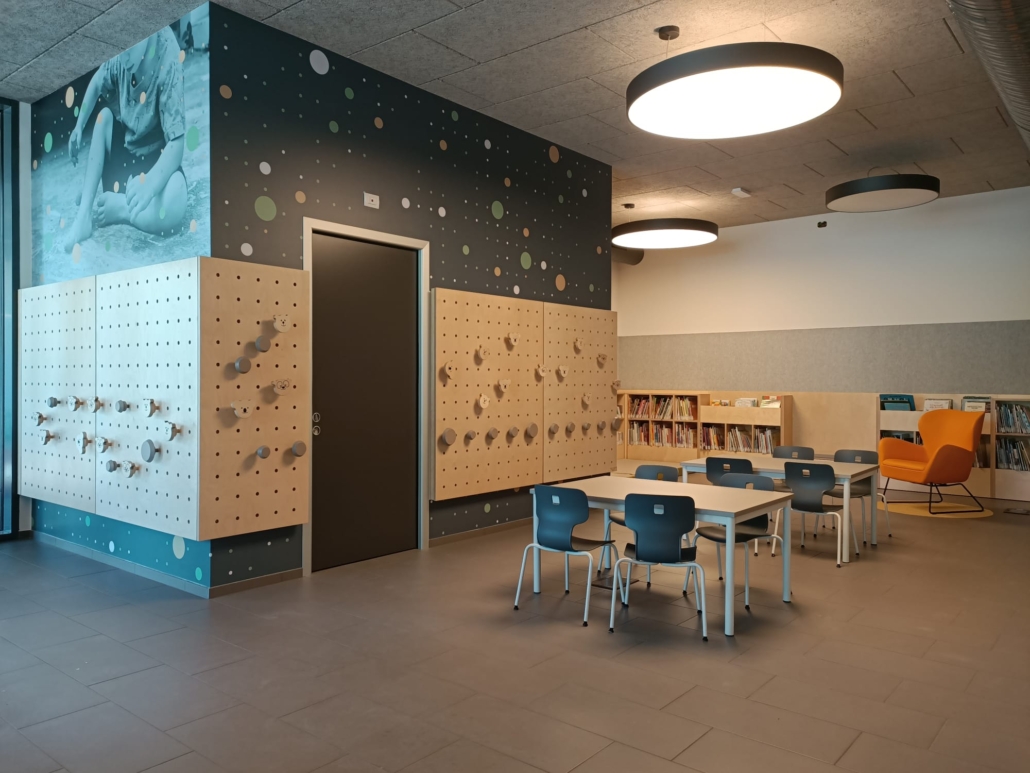
In commercial and public venues, noise can take many forms, creating discomfort both for people inside the space and for those outside.
For example, in bars or restaurants, loud music and overlapping conversations can cause disturbing reverberation, compromising the acoustic comfort of customers and staff. In gyms or fitness centers, workouts accompanied by music and mechanical equipment can generate high sound levels that may become stressful or even harmful without proper soundproofing.
Outside, if located in residential areas, noisy venues can disturb neighbors, leading to complaints and municipal sanctions. Even open-plan offices or large shops with hard surfaces must deal with excessive reverberation, which reduces speech clarity and productivity.
These examples show how important it is to manage the acoustics of commercial spaces effectively to ensure well-being and environmental compliance. Not surprisingly, this topic is also regulated by specific legislation.
This article will outline the main legal framework and provide practical solutions to address the problem.

Regulations on soundproofing for public and commercial premises
In Italy, the main law governing noise pollution and, consequently, the soundproofing of commercial and public spaces is the Framework Law 26 October 1995, n. 447* (Law on Noise Pollution), supplemented by various implementing decrees (Italian national legislation).
This law establishes that anyone outside a venue should not be exposed to sound levels exceeding legal limits.
The D.P.C.M. 5 December 1997* defines passive acoustic requirements for buildings and maximum permissible noise levels in different areas — for instance, 45 dB during the day and 35 dB at night for external noise from commercial activities (Italian governmental decree).
Additionally, D.P.C.M. 1 March 1991* sets sound limits according to acoustic zoning (Italian governmental decree).
To open or modify a noisy business, an acoustic impact assessment must be submitted to the local municipality.
The ARPA* (Regional Environmental Protection Agencies) perform inspections and may impose corrective measures when limits are exceeded (Italian regional public authorities).
For this reason, anyone opening or managing a venue should take all necessary precautions to avoid acoustic issues.
How to soundproof a space: from structural to practical solutions
There are several solutions for soundproofing public and commercial spaces — some are structural and invasive, others, like sound-absorbing panels, are simpler and quicker to implement.
- Structural solutions, such as building double sound-insulating walls or reconstructing ceilings with specific materials, offer complete insulation but are costly and time-consuming. These are essential for highly noisy activities but not always feasible for existing venues.
- Special windows and glass walls can enhance external insulation and are especially useful for bars and restaurants in high-traffic areas.
- Sound-absorbing panels, while not resolving the issue on their own, are an excellent complement to sound insulation interventions, as they reduce the reverberation that tends to build up inside sealed environments. When sound energy cannot escape, it gets trapped — and this is where acoustic panels are effective.
LvB Italia offers tailored solutions for every type of venue, providing guidance on how to enhance both acoustic comfort and interior style.
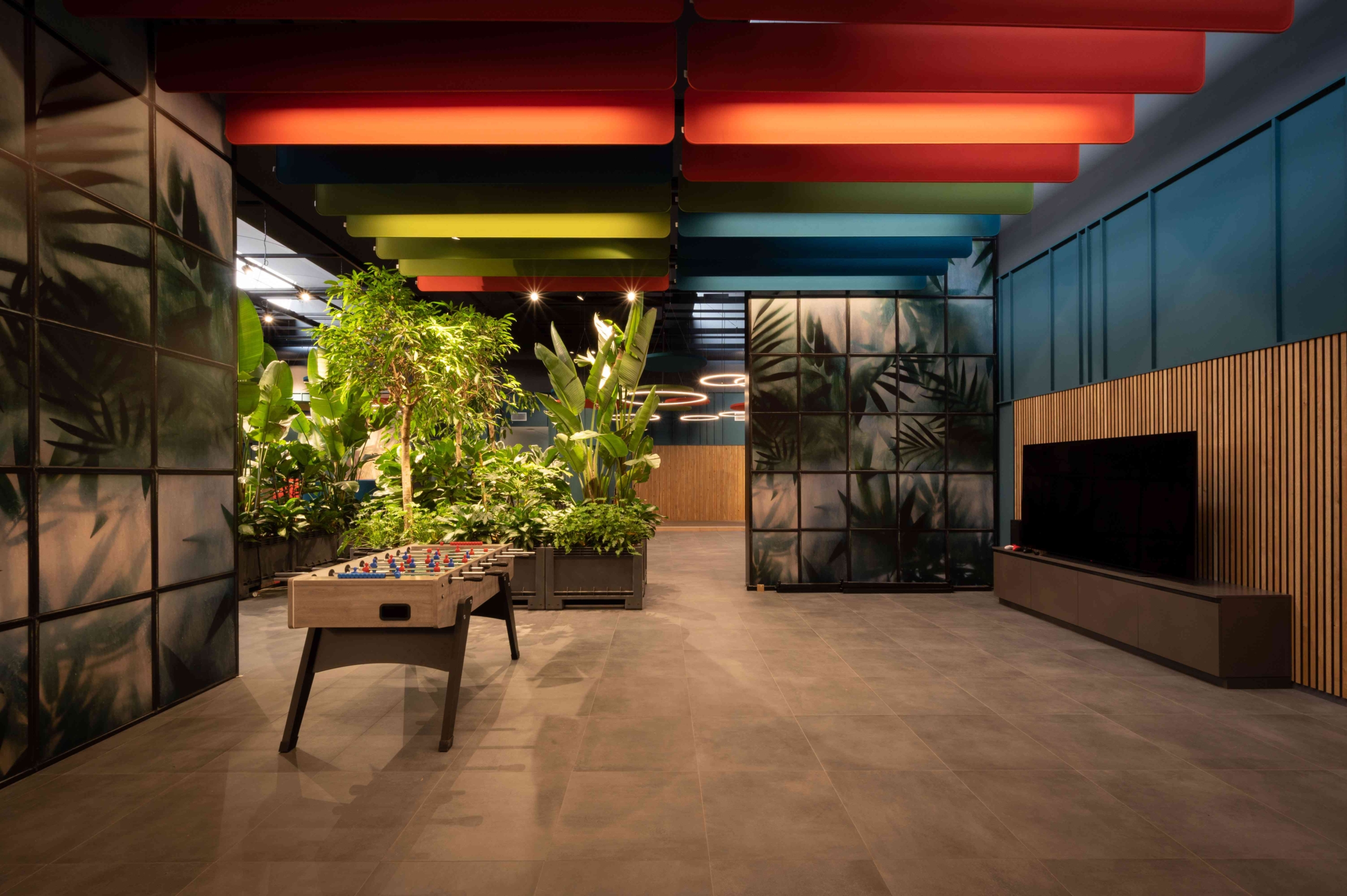
Functional and aesthetic advantages of sound-absorbing panels — three examples
Sound-absorbing panels are the ideal solution for venues that require both acoustic control and aesthetic attention. Thanks to wide customization possibilities, they can adapt to any interior style, becoming genuine decorative elements.
Restaurants and bars
In these environments, acoustic panels reduce conversational noise and make background music clearer, preventing the “sound confusion” effect caused by excessive reverberation. They can be installed behind counters, near customer areas, or close to speakers, and finished in colors that match the décor. This creates a pleasant atmosphere that encourages guests to stay longer.
Gyms and fitness centers
Applied to walls and ceilings, acoustic panels help contain reverberation and adjust sound levels for a more comfortable workout. Choosing durable and easy-to-clean panels makes them ideal for this type of space.
Open-plan offices
Acoustic privacy is often compromised in open spaces, where overlapping conversations cause distraction. Desk-mounted sound-absorbing panels act as dividers, improving concentration and productivity. Wall panels also help, and when customized with logos and company colors, they become branding elements. Mobile or modular solutions can also adapt to changing spatial needs.
C.A.M. — Minimum Environmental Criteria for acoustic materials in public spaces
LvB Italia provides acoustic panels for public and commercial environments that comply with C.A.M.* (Minimum Environmental Criteria) — mandatory requirements for the use of materials and products in public buildings aimed at reducing environmental impact and ensuring safety and quality (Italian public procurement standards).
The Ministerial Decree of 23 June 2022* (latest C.A.M. update) defines acoustic performance standards, including minimum sound insulation values for walls, façades, and horizontal surfaces, as well as limits for equipment noise emissions (Italian ministerial decree).
Sound-absorbing panels intended for public spaces must be made from low-emission, durable, and certified materials with proven acoustic absorption capacity.
These criteria ensure healthier, more sustainable, and more comfortable spaces, in line with public building regulations.
Thinking about improving your venue’s acoustic comfort? Contact us today!