
Retail Design: How Ambient Acoustics Increases Dwell Time and Sales
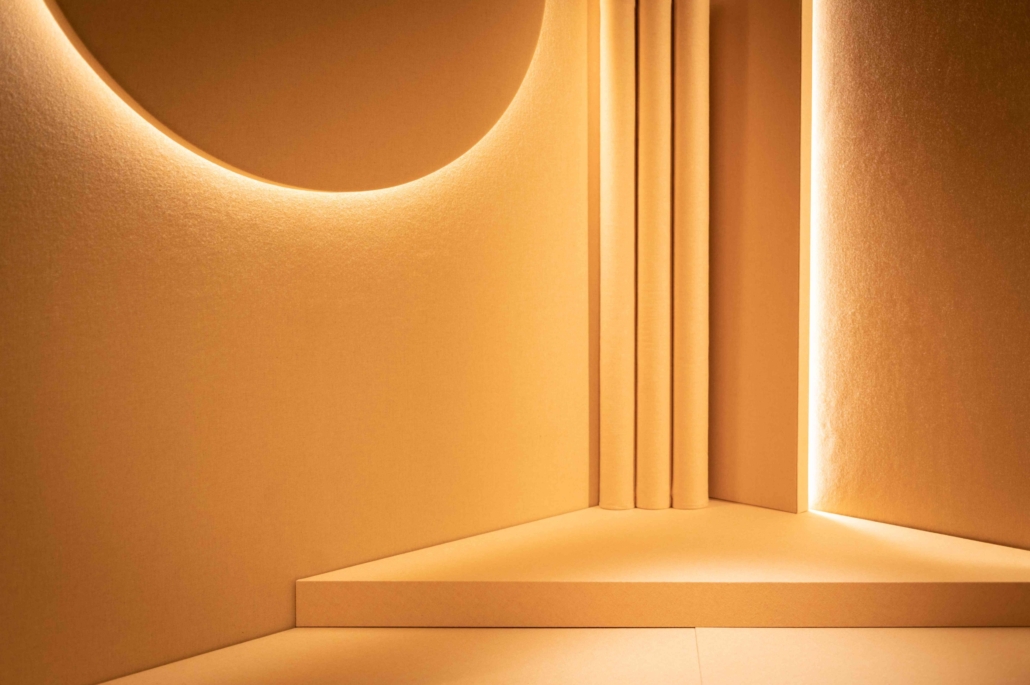
Several factors determine whether a retail space succeeds, from aesthetics to lighting. Beyond these, there’s also a “silent salesperson” with a powerful influence on purchasing behaviour: ambient comfort.
Research in environmental psychoacoustics shows that retail environments with noise levels above 75 dB can reduce customer dwell time by up to 30%. Yet the acoustics of a showroom or store are almost always the last thing considered in retail design, despite being a key strategic lever. Paying attention to this factor — and, in particular, to an experiential store design — isn’t just about cutting noise. It’s about creating a sound ecosystem that invites customers to stay longer.
Noise Pollution: The Invisible Barrier to Purchase
In a retail environment, noise pollution often shows up as excessive reverberation time. When sound “bounces” for too long off hard surfaces (resin flooring, large glass windows, high ceilings), the result is a chaotic-feeling space. In environments with a reverberation time (RT60) above 1.5 seconds, the subjective perception of sonic chaos increases significantly, with measurable effects on customer behaviour.
For the customer, this chaos translates into two dynamics that directly impact sales:
- Cognitive fatigue: the brain spends a significant share of its attentional resources filtering out background noise — resources taken away from evaluating products and engaging with sales staff.
- Reduced speech intelligibility: when reverberation makes conversation between customer and salesperson difficult, it creates a stressful situation that lowers the odds of up-selling and increases the risk of the customer leaving the store early.
Acoustics and Dwell Time: What the Research Says
An acoustically balanced environment invites calm. Reducing reverberation means creating a space where sound feels “alive” without being intrusive. This kind of ambient comfort in retail design turns a store into a sensory refuge and triggers positive marketing dynamics.
Longer Dwell Time: More Minutes In-Store, More Purchases
One of the most widely cited studies in sensory retail is Milliman’s 1982 paper in the Journal of Marketing, which examined how ambient sound characteristics affect the pace at which customers move through a retail environment: environments with slow, controlled background sound slow customers’ pace, increase dwell time, and generate significantly higher sales volumes than acoustically unmanaged spaces.
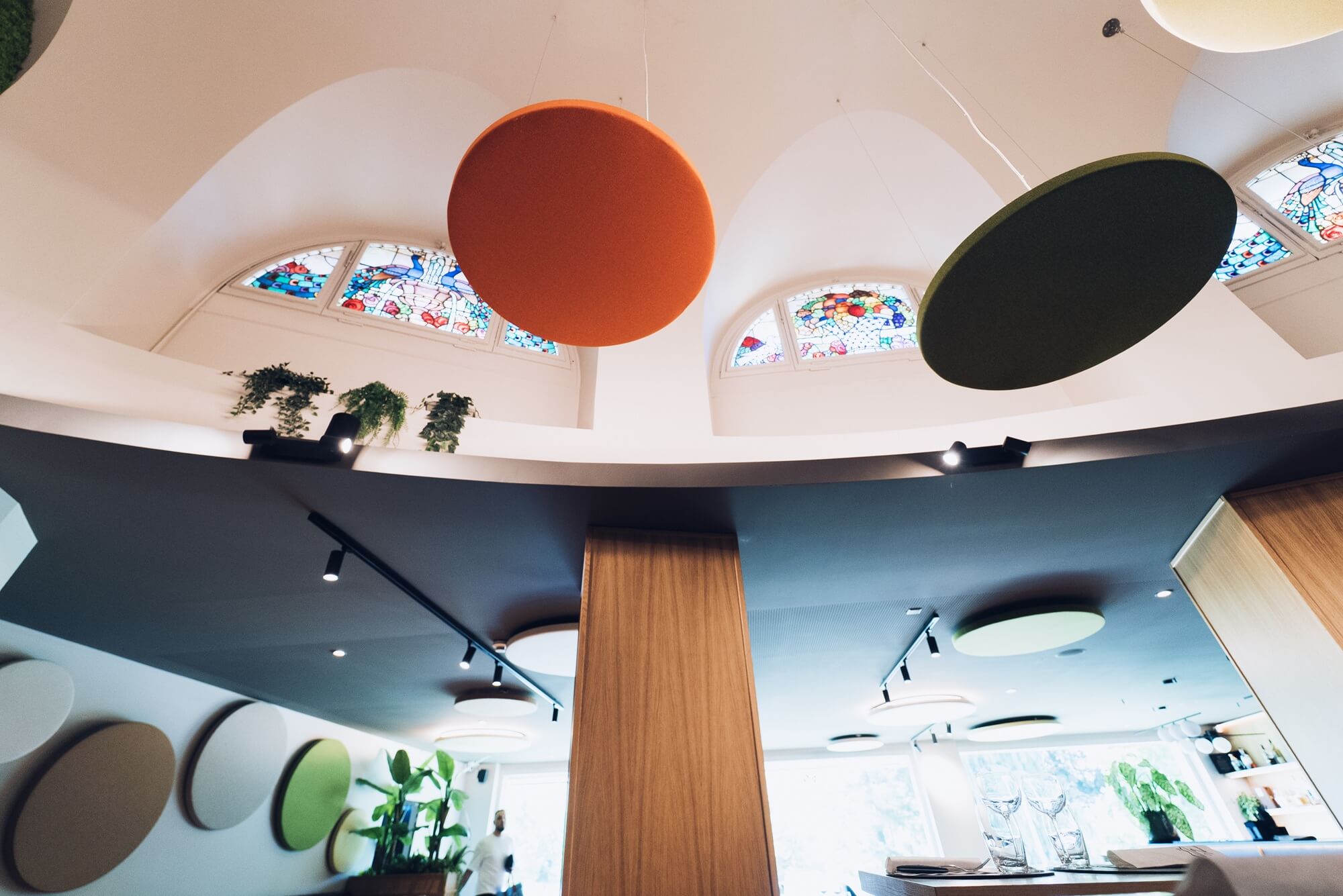
For this effect to actually happen, though, controlling the background music isn’t enough — what’s needed first is an environment with an appropriate reverberation time. In an untreated showroom, with RT60 above 1.5 seconds, music overlaps with crowd noise and becomes a stressor in its own right. LvB Italia’s ceiling panels, such as QUARTETTO — available in 3 cm and 5 cm thicknesses and installable with adjustable cables at different heights and angles — correct reverberation at the source, creating the baseline acoustic condition on which any sensory strategy can actually work.
A Better Customer Experience
Studies in environmental psychoacoustics show that noise levels above 70-75 dB in retail environments increase early drop-off rates and reduce purchase intent. By contrast, an acoustically balanced store is perceived as more polished and trustworthy, with positive knock-on effects on brand image and on how customers perceive the quality of the products on display.
Chebat and Michon (2003, Journal of Business Research) found that combining multiple positive sensory stimuli — including acoustic comfort — can increase average spend by 11.5% compared to a sensorially unmanaged environment. A figure worth bearing in mind: acoustics shouldn’t be treated as a standalone element, but as part of a coordinated experiential design.
LvB Italia’s printed acoustic panels answer directly to this evidence, offering a dual function: they correct reverberation with the same acoustic performance as standard panels while, thanks to sublimation printing, doubling as visual branding elements — logos, textures, imagery — with zero compromise on sound-absorbing performance. A particularly effective solution for showrooms where visual identity is an integral part of the shopping experience.
Mindful Shopping
The absence of acoustic stress lets shoppers focus on product details and the brand’s story. In an acoustically clean environment, sales staff communicate effectively, customers listen and evaluate, and conversation converts more easily into a sale.
For retail spaces where verbal communication is central — automotive showrooms, high-end boutiques, furniture stores — panels with built-in speakers, OTTAVA or other panels from LvB Italia’s, offer an advanced design solution: they absorb reverberation while simultaneously playing audio content (music, brand messaging, sound experiences) through speakers invisibly integrated into the panel structure. A single element that handles both the acoustic problem and the sensory dimension of the shopping experience.
Acoustic Solutions for Showrooms: Design Meets Performance
To achieve these goals, the sound-absorbing materials used in retail acoustic design are engineered to “capture” sound waves and reduce their energy. This process eliminates echoes and unwanted reflections at the source, delivering clean, comfortable acoustics — without making the space feel “dead” or unnaturally silent.
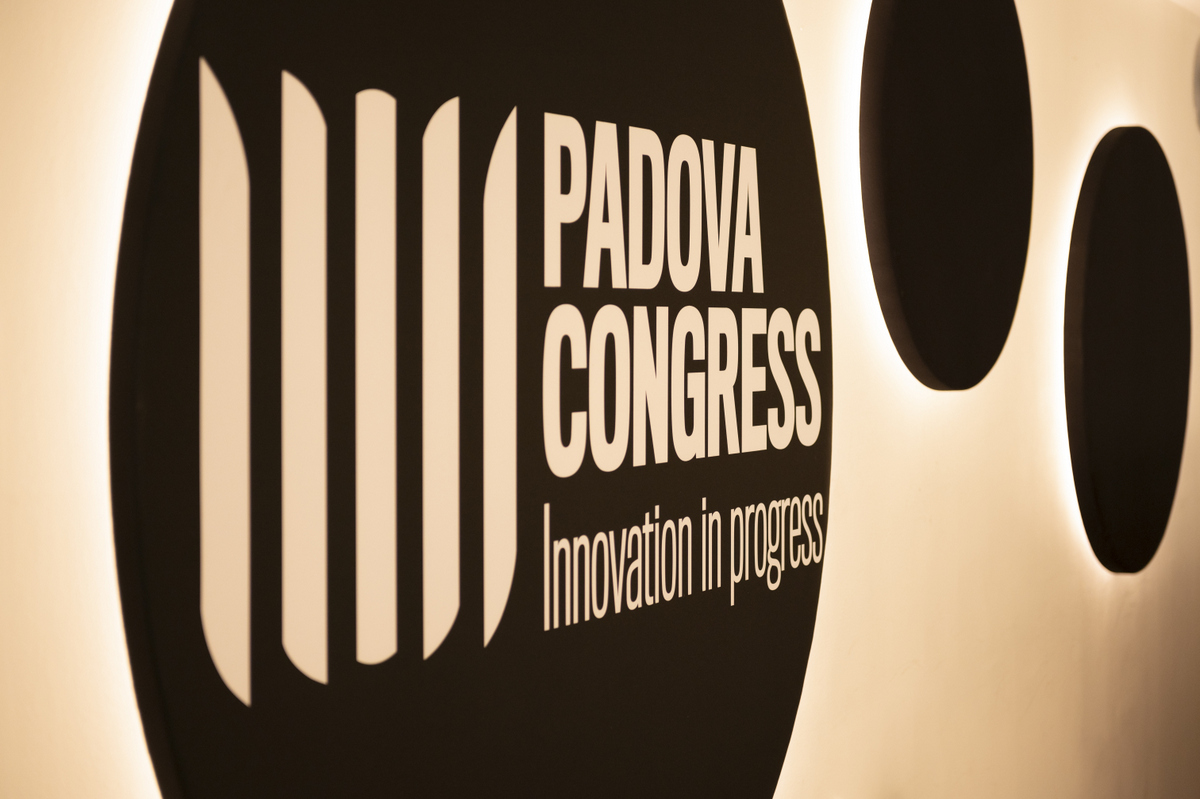
LvB Italia’s acoustic design solutions for showrooms make it possible to intervene effectively without compromising the aesthetics of the space:
- Ceiling or wall panels (QUARTETTO, MELODIA, PRELUDIO NOTTURNO): address the overall reverberation of the space. In a 300 m² showroom with mostly reflective surfaces, installing these panels can bring RT60 down from 1.8 to 0.6 seconds, eliminating the “warehouse effect” and restoring clarity to the conversation between customers and staff. The Notturni line integrates direct and/or indirect LED lighting — a single element that solves both the acoustic and the lighting design challenge at once.
- Three-dimensional furnishing elements: modular dividers and wheeled systems that make it possible to create private acoustic islands within the store — consultation areas, listening zones, experience corners — with no structural work required and the flexibility to reconfigure the layout at any time.
Investing in acoustic comfort isn’t a cost; it’s a retail design asset. A targeted acoustic project — one built not just on material class ratings but on a specific analysis of the space — is the key to creating environments where people want to stay, listen and, ultimately, buy.
Want to know what silence is worth in your store? Get in touch for a consultation on acoustic correction for your space, and see how sound comfort can positively affect your business. A targeted acoustic intervention is an investment that pays for itself quickly, improving both the customer experience and your sales performance.