
Light-sound integration: the functional advantages of LED sound-absorbing acoustic lamps
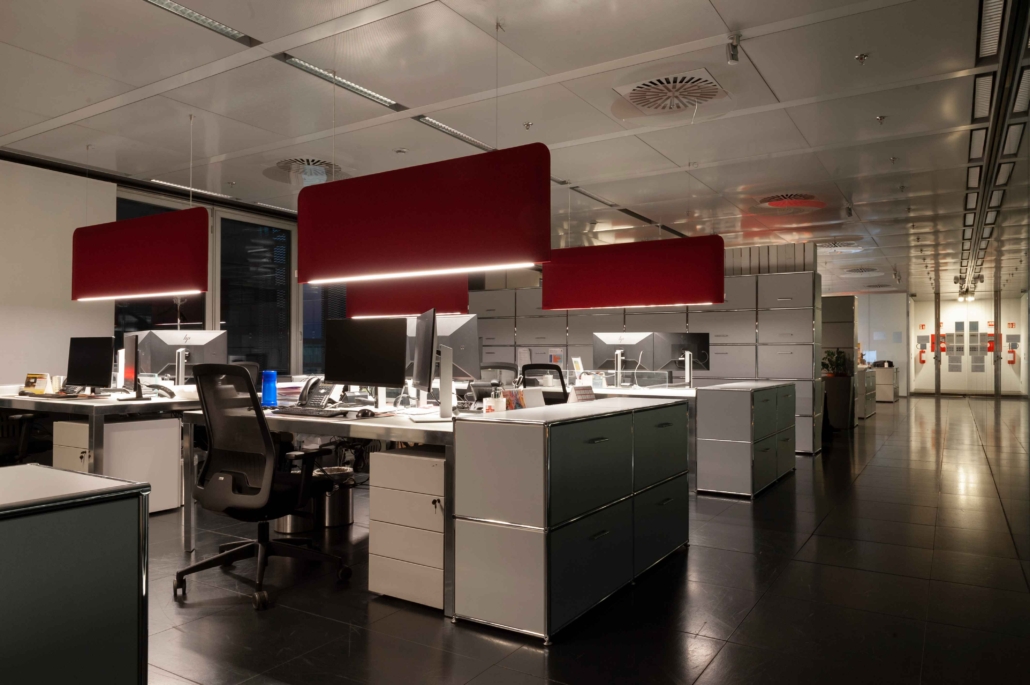
Proper lighting and optimal acoustics are two of the primary characteristics required in an office or workspace to ensure essential comfort conditions for employees. Light and sound can be integrated using 2-in-1 hybrid systems—acoustic solutions for modern offices designed to merge lighting and acoustic correction, optimizing available space and contributing to multisensory comfort in corporate environments.
How to save space by integrating lighting and acoustics

Light and acoustics integration reduces the need to install separate elements, freeing up wall and ceiling space by solving two architectural challenges in a single intervention. Choosing integrated acoustic lighting systems allows project specifiers to halve installation time and reduce visual clutter. With a single cable and one fixing point, it is possible to illuminate a desk or boardroom table perfectly while simultaneously dampening reverberation thanks to high-performance polyester fiber internal cores.
Beyond aesthetic savings, the core advantage is functional: integrated LED lighting generates minimal heat, preserving sound-absorbing fiber integrity, durability, and safety. Investing in these hybrid solutions creates an office environment where visual fatigue is minimized and acoustic stress is eliminated, directly boosting workplace productivity.
Discover ourcollection of acoustic sound-absorbing lamps.
Light and sound: calculations based on matching physical principles
Lighting design calculations andacoustic calculations describe distinct physical phenomena, yet they follow surprisingly similar engineering logics. In both disciplines, analysts evaluate an emitting source, its wave propagation through space, interactions with surrounding surfaces, and the final energy quantity perceived at a specific target location within the room.
Light emitted by a fixture is partially reflected and partially absorbed by walls, ceilings, floors, and furniture before reaching the working surface. Similarly, sound generated by occupants or office equipment propagates through the space, strikes architectural surfaces, and is reflected, diffused, or absorbed before reaching the listener’s ear.
For this reason, both lighting design and acoustic engineering rely heavily on source power emission, distance, room geometry, material absorption coefficients, and receiver positioning. While measurement units and evaluation metrics differ, the fundamental goal remains identical: controlling energy distribution within space.
This physical analogy yields a critical architectural advantage: optimal positions for lighting fixtures frequently coincide with the most effective locations for acoustic treatment. Above a workstation, conference table, or collaborative hub, light must be delivered to the task area while simultaneously capturing sound reflections from speech.
Integrated acoustic lamps capitalize on this functional overlap. A single, correctly sized and positioned fixture distributes task lighting where needed while increasing sound absorption right near primary noise sources. The result is a more efficient use of architectural surfaces, fewer installed fixtures, and higher visual and acoustic comfort integration.
Case Studies: the proven performance of integrated design
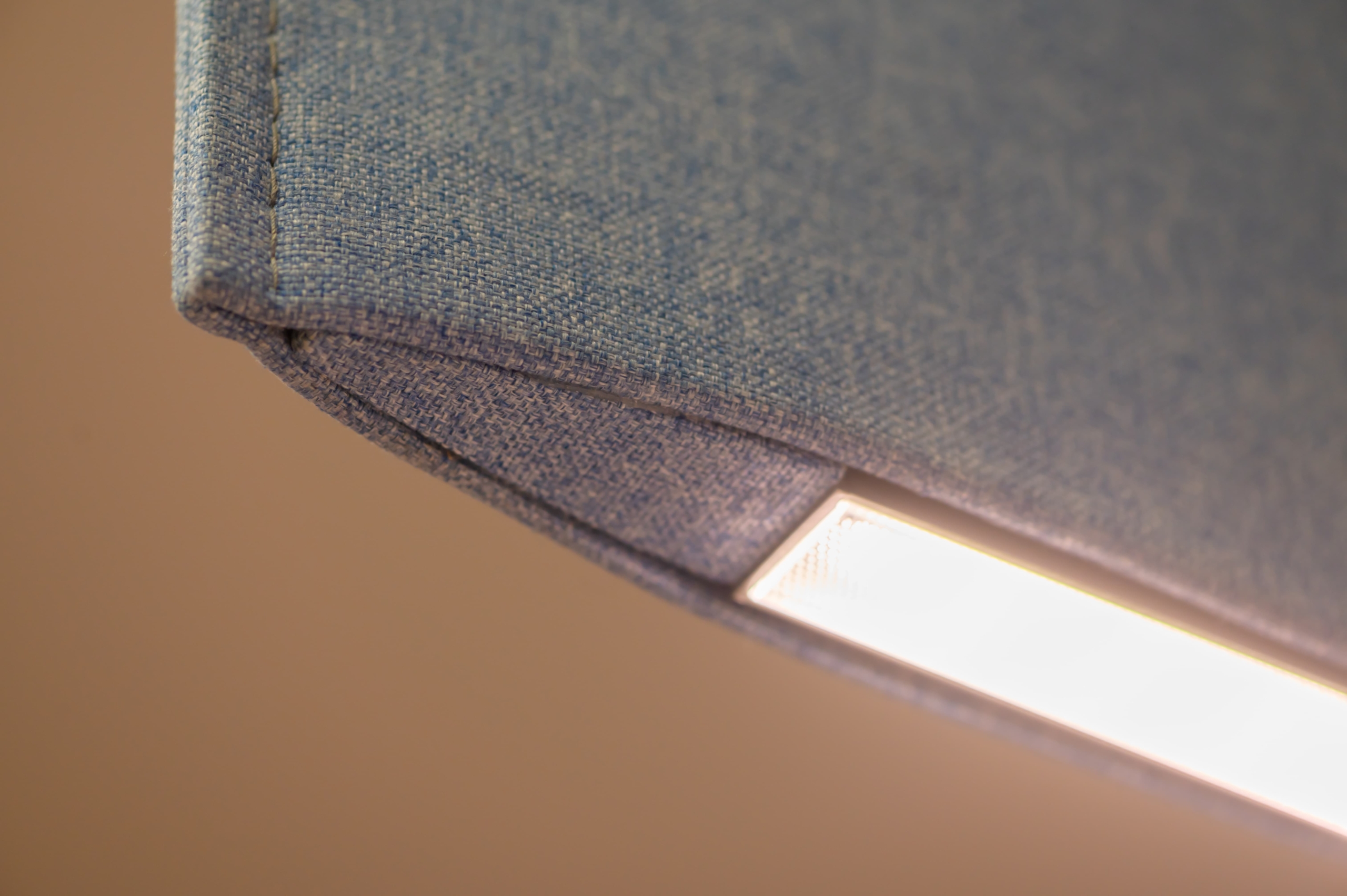
LvB Italia provides specializedtechnical consulting for integrated systems, developing custom-engineered solutions for complex spaces. Here are selected successful corporate projects:
- Taghleef Industries: acoustics became an architectural feature inside their Innovation Center, creating bright, collaborative workspaces.
- EAV Naples (Porta Nolana Station): Ottava ceiling-mounted acoustic panels optimized executive office acoustics while seamlessly blending into room aesthetics.
- Treviso Historic Villa Offices: custom acoustic panels integrated with building services and color-coordinated fabrics achieved visual, thermal, and acoustic harmony in a heritage building.
- Padova Congress: custom-printed Melodia acoustic panels, including a 2-meter diameter backlit acoustic disk, delivered subtle, highly effective ambient conditioning.
- Elettra: custom acoustic lamps provided optimal lighting over workstations and meeting spaces, eliminating background rumble and enhancing modern architectural finishes.
Contact our engineering team to design a tailored integrated solution for your corporate project.